羊羹・錦玉羹・ようかん・きんぎょくかん
Yokan & Kingyokukan
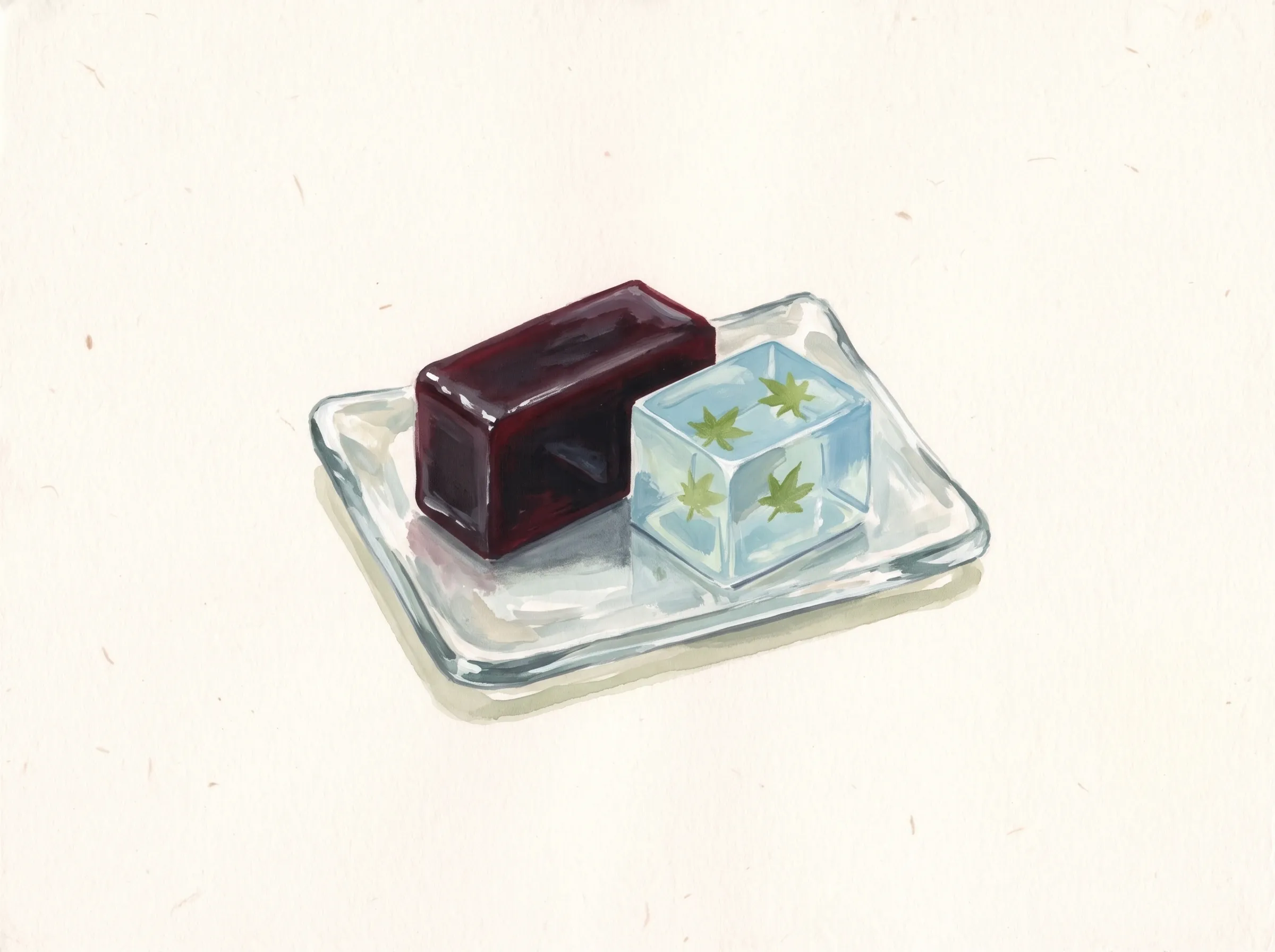
A family of sweets set with agar: set bean paste and it is yokan; finish it clear and it is kingyokukan.
Yokan is a sweet made by adding agar to bean paste, boiling it down, and pouring it into a mold to set. There is neri-yokan, kneaded until firm; mizu-yokan, with more water, for summer; and mushi-yokan, which is steamed with wheat flour or kudzu instead of agar.
Kingyokukan is a transparent sweet made by dissolving agar and sugar and letting it set. It is also called kohakukan. With a clarity that suggests water, ice or sky, it is often used in summer jo-namagashi. The expression is varied: small motifs can be floated inside, or it can be layered with other doughs.
The name yokan derives from a Chinese soup (atsumono) of mutton, and it is said to have begun in Japan when Zen monks made a likeness of it with adzuki beans and other ingredients.